perjantai 5. helmikuuta 2021

ON ADDICTION - CEOs, DRUG ADDICTS AND EVERYONE IN BETWEEN

Audio version here:

 https://youtu.be/qpM7Tv0QNME 


Personal history, uncertainty, and the current social structures create many ways for destructive addictions to show up. While it is more common for us to think about addiction in terms of drugs and alcohol, talks about social media addiction, food addiction and more are becoming more common. In fact, the current scientific consensus is that there is only one single addictive process that functions in the human mind - and unless you are convinced that you are hundred percent not prone to addiction, the same process might be affecting you too.


The addictive process involves the two main "feel good" -systems of the brain, the opiate system, and the dopamine system. This means that you can become addicted to basically anything, depending on your life experiences and circumstances. Therefore you can be addicted to drugs, alcohol, pornography, food, shopping, exercising, profits, marketing metrics, and even other people. 


Because by definition any addiction is harmful, it's beneficial to understand how the addictive process works - and even if you don't really care about harm and only focus on yourself, understanding the addictive process can help you exploit people. But this too carries its underlying risks, that can undermine your personal goals. 


This text is about trying to understand in simple terms how the addictive process works, where it comes from, and how it affects us. Some extra time will be spent on looking at business organizations and how addiction can work in their favor or against them and how consumers, employees and the leadership of organizations can be more conscious of how the addictive process might be affecting them.


Overall, I've done my best to put together as truthful of an article as I can, without being judgemental of any specific way of doing things. The truth will set you free and all that jazz, as you might've heard... The topic can provoke emotions, so I suggest taking a deep breath and trying to remain neutral, as more and more difficult topics are discussed.


A BRIEF LOOK AT ADDICTION


There is a lot of new and interesting knowledge emerging in the field of addiction research. That's why we'll have to take a look at the addictive process itself first because things aren't quite what we might've thought before. Later, we'll get to the juicy stuff about how businesses, especially in marketing communications can hide powerful addictive loops, that in the end are most likely bound to create less success in the life of the consumers, workers, and businesses involved.


In the words of Gabor Maté, one of the leading experts on the topic, addiction "manifests in any behavior that a person finds temporary pleasure or relief in and therefore craves, suffers negative consequences from, and has trouble giving up." This is the definition of addiction. It involves short term relief or pleasure, impulsive and compulsive cravings, it's harmful and it's hard to give up. That's it. Addiction doesn't involve any specific substance or any specific external circumstance.


To put it bluntly, addiction is an internal state, and it cannot be recognized from the outside, without understanding the context. Now, drugs, or more specifically narcotics are very often the way addicted people handle their addictions, but even then, it's impossible to tell whether or not drug use is a sign of addiction. Let's look at an example.


William S. Halsted is one of the most respected surgeons of the 20th century, and one of the founders of the famed John Hopkin's hospital. He also used 180 mg of morphine every day, without which he would lose his productivity and positive mood. Was he addicted? Possibly, but you can't really know unless you would know the larger context of his life. Was harm involved? If, in what way? 


In the same vein, someone jogging might mean that a person is taking care of themselves responsibly, or is in the throes of an orthorexic addiction, that is driving them deeper and deeper into exercise addiction and social isolation. Later we will see, that the same can go for business leaders making addictively driven decisions, or individuals soothing their cravings with various forms of buying and consuming.


THE SOURCE OF ADDICTION


Addiction is by and large a relatively new phenomenon, that has grown after the industrialization of the modern world took off. The strife and turmoil of previous generations have now been supplemented with broken communal structures, an ever diminishing family unit, social isolation, and an abundance of activities and substances that can soothe the related pain and longing.


At its core, addictive behavior stems from trauma. It might be tempting to think that unless there is violence or severe privation at play, trauma couldn't happen. Unfortunately, human beings - especially young human beings - need more than just physical safety and food. Their brains, emotional systems, decision-making faculties, and their growth into a whole mature human being is also dependent on genuine emotional connection.


This emotional connection is a scientifically proven, hard fact, that cannot be disputed by wishing it away or scoffing at something as soft as "emotions". The emotional systems of the brain - the limbic system - connects the deeper primal parts of the brain to the newer, cognitively more sophisticated systems. Without the support of nurture and care, these systems don't develop properly, leaving the person in question a mental cripple, or at least more addiction-prone than their counterparts.


Deprived of proper emotional bonding, a person learns to get their good feelings not from people, but from different behaviors. These behaviors then supply the brain with the precious feel-good-chemicals that make the person feel loved and purposeful. The feeling of love and calm comes from the activity of the opiate system, which can be activated most commonly by friendly touch and sex, or in the case of narcotics, heroin, and morphine. The more frisky counterpart of the opiate system is the dopamine system. It creates the feeling of excitement and purpose, and it's activated by perceived movement - physical or abstract - towards a goal. Cocaine is the most common drug that activates the dopamine system.


In non-addictive processes, the ebb and flow of these systems remains balanced and healthy. But, in the case of the addicted person, the situation can be way grimmer. In fact, what has recently been uncovered is that a person deeply in the throes of addictive craving is actually unable to make decisions for themselves. That sentence is worth reading again. Here is why:


One of the finer parts of the human brain is the prefrontal cortex, which can be called the CEO of the brain. But, it actually doesn't come up with decisions by itself. All the impulsive decisions are generated deeper in the brain, and the job of the CEO is simply to choose the best course of action out of the options presented to it. This is sometimes dubbed as having the "free won't", instead of the common idea of having a "free will".  We don't have a free will to just come up with anything we like, we just choose from the options presented to us by our less conscious mind.


Amazingly and horrifyingly, if you are suffering from addiction, the pre-frontal cortex does not function properly. As the irresistible cravings start generating the impulses to action, the addicted brain shuts down the inhibitory power of the pre-frontal cortex. The CEO goes to sleep, and the employees are left on their own, without a proper long-term vision. A person in this state is as capable of rational choice as a paraplegic is able to do a vertical jump. It is impossible, and no amount of finger-wagging or berating is going to change it. 


Bottom line, the addictive process is a damn powerful one, if it has taken hold of a person. With our current social and economical structures in place, this powerful driver is becoming more and more common, irrespective of your stance towards our current situation. 


TRAUMA, ADDICTION AND THE MARKET SOCIETY


With addicted people inhabiting both the unpleasant looking margins of our society and also any other realm where the feeling of love and purpose can be dished out without genuine human contact (think fast food, sales quotas, and material possessions for example), it's time to look at addiction from a wider perspective.


Hardcore drug users, who spiral down into a complete bio-psycho-social mess of decaying health, mental problems, and broken relationships often have a terribly traumatic past full of abuse and torment of the worst kind. For most of us, this isn't our lot. More subtle forms of disconnection from our families and peers is common. Then, as our economic system dictates, we play a significant role in our lives as consumers.


You might've heard that women experience a dopamine boost as they purchase a lifestyle magazine. But there's nothing special about women's lifestyle magazines. It is the same effect when you go get burgers from McD., order a beer at your favorite pub, or buy a new car. The more important question is, why do so many people seek out these things even when it's detrimental to their long term well-being, be it physical, mental, or even financial.


I will later make the case that the way current marketing - the communications that urge people to buy stuff - is developing, is driven by leveraging the addictive impulse. But for now, you're going to have to accept this assumption.


So, marketing messages are constantly telling people they need to buy something or else they will have problems, not be desirable or complete, or they'll remain in some kind of pain. These messages wouldn't hit home, if there wasn't a real, experienced pain within us, that makes us hope the pain would go away. This pain is the disconnected, inauthentic relationship we have with our loved ones. 


As the natural ways for our brains to get their opiates and dopamine are in shorter and shorter supply, we turn to consumption as a way to soothe our inner desire for emotional connection and genuine relationships. Leveraging this inner longing is a powerful way to drive sales, but this doesn't only concern the consumer.


In the case of people playing their productive roles, the same internal milieu can be driving them forward. Think of a mid-level manager who wants to progress in their career to get more money, status, and power. It is very possible that these desires were born through parental neglect, abuse, unhealthy pampering, or plain disconnection. As an adult, the way this manager hopes to fill this vacuum is by acquiring the status symbols the marketing messages - and the consumers - prop up to be a way to attention, admiration, and ultimately human connection. 


So, just as the average consumer can be leveraged because of their internal needs not being met, the same can happen for a mid-level manager, or even an extremely dedicated C-level executive responsible for thousands of people. Make no mistake, the addiction process can show up anywhere, in the "lowly" heroine addict sleeping under the bridge and in the respected workaholic CEO fuelled by Adderall (read: amphetamine). 


HOW ADDICTION IS MAINTAINED


We all are playing our part in perpetuating the addictive processes festering in our brains. Possibly the best breeding ground for keeping the addictive behaviors running is what might be best called the Sick System.


I originally discovered the concept of sick systems in a clearly well-researched and experience-based article written under the pseudonym Issendai. Unfortunately, this relative anonymity leaves the writer unable to bolster their case with any social credentials, but the message is extremely eye-opening and powerful.


In the case of the sick system, there are four key elements present:


1. The members of the system are too busy to stop and think

2. The members are constantly tired

3. The members are heavily emotionally invested

4. The members are rewarded intermittently


In the case of a hard drug addict, these conditions are more than likely to occur. The constant struggle to acquire the next "warm and loving hug" from the needle is bound to keep the person busy and tired. Then, there's no question that the emotional investment, as the trauma-based self-medication is a substitute for a basic human need of love and belonging. Finally, the uncertainty of having a stable source of narcotics creates a cycle of intermittent reward.


The power of intermittent reward cannot be understated. As discussed by the brain research legend Jaak Panksepp, intermittent reward elicits the greatest motivational boost - meaning dopamine - out of any other ways of receiving rewards. For whatever reason, all mammals seem to work the hardest for this type of reward, which is unpredictable both in size and frequency. 


For anyone having had a drug addiction, the above is likely to ring true, but similarly, many executives might have experienced the rekindled vigor of the employees who have received an unexpectedly large Christmas bonus. ...and don't even ask about casinos or modern smartphone games, they are riddled with intermittent rewards to the maximum.


But, the sick system doesn't leave even those alone who are in stronger positions of power. A venture capital investor addicted to the newest and sleekest tech-startups, a party-leader dreaming of ever-increasing political power, or a superstar looking for more and more popularity... They all can be addicted to their "drug of choice", craving, harming themselves and others, unable to stop.


On a systemic level, the above-mentioned four qualities form the same environment, as the addict is experiencing within. A prime example of this was presented to me in the world of marketing, more specifically in the world of internet success gurus. So, let's look at what some of the current marketing trends can tell us about how our addictions might be controlling us.


MARKETING AND ADDICTION


Most people are able to receive marketing messages, and those who do, most likely bathe in them almost every day. Because we are bombarded with marketing messages, it is useful to be aware of how marketing is working. A special corner of marketing can be found in the internet-guru realm, where charismatic people offer to teach the secrets to success and wealth through their courses, mastermind groups, and expensive events.


The methods of these internet-gurus are currently taking root in many places. The reason for this is that they are extremely well tested and powerful - and they work, partly thanks to the way they leverage our addictive tendencies. Furthermore, there is a very addictive element for the gurus and their marketing teams too, which can help explain the ever-growing expansion of shrewd, cunning, and outright manipulative marketing messages.


An ex-internet marketer and a whistleblower of the profession called Jim Clair has written excellent pieces on the topic of the destructiveness of guru-marketing for consumers, the guru's themselves but also non-suspecting companies, who adopt these methods without understanding what they are doing.


Here's a quick look into the recent history of marketing, so we can understand what's going on. Before the internet people were often sent letters that told them to buy directly from the seller. This "direct response marketing" was often very effective and produced great sales. As the internet became popular, and a lot of people started using e-mail, direct response marketing could be done on a mass scale and super-fast.


E-mail based direct response marketing has been used now for decades, and some best practices in the field have emerged. For example, you might've noticed that with certain companies or even apps, you might receive a huge influx of marketing messages per week, sometimes even in the dozens. Furthermore, you might've noticed that the messages have started to become more cunning and that they trigger more emotions. It's way different to see an e-mail saying "New Offer from Awesome Phones" compared to "Hey X, sad to see you go..."


Both the volume and style of these marketing messages have been tried and tested in the world of e-mail marketing, a world riddled with scams and get-rich-quick schemes. And this brings us back to the topic of addictive behavior.


From the point of view of the consumer, the marketing messages have been optimized for decades so that the best possible way of triggering your emotional pain and urge to buy can be found every single time. These practices are still relatively new in more traditional businesses, but many well-meaning service providers are getting hooked on this type of marketing because it promises quick results. 


For those deeper in the know, the success-gurus, and their inner circles, the issue is two-fold. Promising quick results to their audiences and desiring the same results themselves, they are forced to both over-promise and optimize the marketing strategies they use for the quickest and dirtiest gains. This leads to pissed off and burnt out audiences and an ever-increasing need for more and more.


For example, a massive player in the game is Russell Bronson, the founder of Clickfunnels. This innocuous-sounding service is one of the biggest platforms that host vast numbers of online sales-pages all too familiar for us. These online sales-pages are the same direct response marketing sales letters from years past, now cranked to the max by technology, automations, and data-driven decision making.


As services like Clickfunnels become more and more popular - partly thanks to the get-rich-quick -mentality - both big and small businesses start using these services, without even thinking about it too carefully. Why would you spend time learning coding and web design, if you can subscribe to a service where you just type in your messages and beautifully optimized sales-pages pop up in minutes?


Get-rich-quick, short-term optimizations, fast results, automations... Pay attention to these terms. Their less savory counterparts would be impatience, laziness, greed, inauthenticity, at least in my opinion. However, this is not said in a blaming tone. We live in an economic environment, where competition is tough, and it can be very hard to keep your market share (or your job). 


AUTHENTICITY TO THE RESCUE


Now, here is one surprise, but also a looming disappointment. The antidote to the addiction-laden quick-results marketing is authenticity, which is also an antidote to the underlying issue of lost human connection and addiction itself. In the bigger picture, the idea of authenticity can be traced back to many spiritual and religious practices, and it has been a key topic in the existentialist philosophies of the 20th century. 


"What people crave is real authenticity" is becoming a common term in marketing circles, with even the idea of "anti-marketing", marketing that doesn't look like marketing so it feels authentic having been born in recent years. So where's the disappointment?


It's in the unforgiving reality of life, that try as you might, authenticity cannot be manufactured. It is created between real human people in real interactions. But this hasn't stopped the search for so-called "authentic marketing".  One can even find articles describing in detail what are the messages and mediums in which automation seems to be okay for consumers, in which it is not, and believe it or not, there are even discussions about what are the ways that authentic, human-like interactions could be automated for the best sales results.


Almost paradoxically, this search for the "optimal" and best-performing marketing systems and the attempt to automate authenticity is actually perpetuating the underlying reasons for the increasing addiction in our society.


The old idea of ends becoming means and means becoming ends could hold true here. While the stated mission could be to create better connections between humans through useful services and products, and marketing messages that help people to find these offers, the opposite is happening. 


Optimization, data-based decision making, the automation of authenticity - many, if not all of the metrics are based on numerical results. How long did the person stay on the page? How long did their finger hover over the sales link? How many people clicked "Buy Now!"? These questions are answered with numbers, and then the goal, the so-called "results" are defined based on these metrics. 


So, in the end, marketing teams could be driven towards using those methods that drive the metrics up, because the CEO is driven to drive the revenue up with unprecedented speed, and the employees are driven to soothe their normal, slightly addiction-prone lives with products from companies that do the same.


LEVERAGING ADDICTION


Soon we'll take a look at some new perspectives and possible solutions for an approach that could avoid the pitfalls of the addictive loops. Before that, we'll wrap up the ideas about addiction, marketing, consumerism, and business organizations. 


So, a key element in addictions was harm. At first look, this seems simple enough, but with a more skeptical attitude, the concept of harm becomes hard to pin down. For example, it is one thing to say that a drug addict suffering from a foot infection is harming themselves if their drug use prevents the safe use of antibiotics. Very few would argue that losing your foot because of a two-week heroin binge is a worthwhile deal. 


But with money, careers, lifelong dreams, and more on the line, it becomes a lot harder to pin down what exactly is harmful - or at least the evaluation of risks becomes more difficult. Is it okay to spend years on end working on a business, an athletic goal, or an artistic vision while sacrificing your health and relationships? These questions require detailed, personal answers, and no straightforward recommendations can capture the whole picture.


Instead, here are some general ways individuals and organizations might benefit from both a short-term and a long-term approach to addictive behaviors.


For example, if you are a C-level executive who is pressured by the investors to grow extremely fast, you might opt for a more short-term strategy. Here leveraging the possible addictive behaviors might work in your favor. Searching for those recruits who have talent and skills in the field, combined with a deep desire for attention and admiration can definitely help a company in the short term. By getting the addiction-prone admiration-seekers into positions where they can get intermittent bonuses and dream of career-progress, an immense output can be reached, at least for a while.


In the long-term, the above strategy won't necessarily work that well. As the individuals in the system can't receive the "hits" they are craving for, their sense of well-being starts to go down. Longer work hours, pent up frustration and a worsening engagement in meaningful activities outside of work will start eating up on the employees. If the person in the case is prone to addiction, this can lead to impaired, impulsive decision making and self-centeredness, pushing things deeper into the dynamic of the sick system.


As the system becomes sicker and sicker, the productivity of the system starts to dwindle. A simple concept by Jean Piaget, one of the greatest psychologists of the 20th century, helps to highlight this issue. Imagine two systems, one which functions through coercion and force, and another where individuals do their tasks voluntarily. Putting human decency and morality aside, the latter system will be more efficient just for the simple fact that it doesn't need to use resources for coercion and exerting force on its members.


This is why it is useful to understand addiction and the possibility of sick systems for anyone who is involved in business, or in any human organization for that matter - be it governments, hobby clubs, or even families. If you are okay with human welfare being short-lived, as you aim for quick returns, leveraging those prone to addiction is logical.


However, if you are looking for long-term stability in a system, avoiding the pitfalls of addictive behavioral loops might be something that saves you a lot of trouble. If you as an individual are looking for a place that can fit into your life and create meaning and good feelings, avoiding organizations with addiction-prone cultures is a good start. If you are a leader or a visionary who is trying to create a long-lasting organization, the same applies. 


With this in mind, let's turn to some key concepts and hopefully eye-opening ideas that can shape your thinking towards less addiction and more human connection.


THE POWER OF GENUINE COMMUNITIES


Trauma lies at the heart of addiction. In most cases, however, it is not just individual trauma, but a multi-generational dysfunction passed from the parents to children, to their children, and so on. Privation, war, disease, uncertainty, isolation - these things ultimately affect individuals, but the individuals themselves are embedded in a social environment. As human beings, this social environment is our families, friends, elders, and youths. 


Therefore, to avoid systems that worsen the addictive loops, multi-generational traumas need their more humane counterparts. The idea of intergenerational health can aid here. Just as there are ways to act that keep on adding to the trauma baggage, there are ways to act that build genuine, authentic relationships, thus giving people the connection and care they need. 


One of simplest ways to improve intergenerational health is to focus on real communities. Undoubtedly the virtual communities that have emerged in the past decades have facilitated many fruitful exchanges and relationships between people. But, in most cases, a key element is missing - real physical presence. The overwhelming majority of human communication is non-verbal. Without access to other people's physical presence, an immense amount of this non-verbal information is untapped.


By focusing on smaller, real-life communities and local action, deeper connections can be built. The process is slower - and it can't be sped up by automations or data - but systems built on these types of interactions won't suffer as much from the burden of isolation, meaninglessness, and addictive escapism.


Real-life communities give the chance for authentic relationships to emerge. These relationships in turn are the foundation for purposeful action. As individuals engage in their environments, they themselves are able to become meaningful in their own eyes and experience personal fulfillment. From the point of view of short-term efficiency, this is antithetical to the wish to automate everything that can be automated. But long-term it might prove to be the way for a lasting impact.


Consider the craftsman who is deeply engaged in their work. Their attention to detail and care in their given task fosters a sense of meaning, which can be seen, felt, and appreciated by other people. These qualities then help build better connections and more trust between the individuals. This is nigh impossible in the case of automated, mass-produced products and services, handed down by bots, sequences, and faceless sales funnels.


This isn't to say automation or mass-production should be done away with. The simple point is to give another perspective on the matter, to broaden your toolkit.


TWO HELPFUL PRACTICES


So, what might be a practical way forward, where to start, if a less addiction-prone and more authentic world is one that you'd like to inhabit? Let's return to Gabor Maté's work for some insight. 


First, there's the idea of paying attention to your own reactions. The concept might be familiar to you from currently popular mindfulness and meditation practices, and its roots trace back to the most ancient spiritual practices known to man. The idea is simple: before you act, pay neutral attention to the emotions you have in the situation. 


By practicing this non-judgemental attentiveness, you may start to notice that what you might currently consider as your authentic and self-directed behavior is often habits and learned loops - and if you've ever noticed addictive tendencies in yourself, this is the place where you can start to understand them.


In our current world, it's very likely that you might have some addictive tendencies - or at least you might've experienced periods where something harmful in the long term has served you as your support through difficult times. By attending to these times and your inner landscape you might be able to start developing a deeper understanding of what is going on in your mind, and therefore in other people's minds.


Maté combines the idea of bare attention with what he calls compassionate curiosity. For example, if your dutiful friend is suffering from a break-up and self-medicating with prescription opiates, you might feel worried and irked. However, by asking curiously from them, or just posing the question in your head, "why is this person doing that" you might now understand that they are fulfilling a deep, human need. 


The same might go for the social media addicted Instagram-junkie, always stressed sales team leader, or even the emotionally neglected leader of a country: there's a good chance they are doing what they are doing because they believe that's the only way they'll get their basic human needs met. To every one of us, it's about real or perceived survival, whether or not we think about it that way.


Even those people around you who would deserve the worst of insults - and futures - can be seen in a different light. The abusive spouse, the manipulative boss, the sly co-worker, or whoever it is that seems to be being the worst possible version of themselves... Are they being mean or evil on purpose, or are they being gripped by insatiable cravings, impaired decision making, and emotional pain stemming from a traumatic past?


The point is not to excuse bad behavior. That's a completely different topic. The ultimate point here is, that equipped with a better understanding of what might be going on in your and other people's minds, you can make better decisions.


By extending this compassion towards yourself and your local communities, you can lessen the grip that the elements of the sick systems have on us. If you are interested in a more authentic world with fulfilling human relationships, understanding the addictive process and how it shows up in our current world can help you to start creating a world of meaning and connection, instead of frustration and suffering.


maanantai 27. heinäkuuta 2020

Want To Solve Any Problem? - Learn To Learn!

Learning has to happen if problems are to be solved. This means, that in any social situation where problems are present, people will educate each other in different ways. In fact, if there is a problem, it shows that someone needs to learn something, and in most cases, this means everyone involved.

In this blogpost, I will discuss learning in a face-to-face setting. I will first talk from the point of view of the “Structure of Observed Learning Outcome” (SOLO). This will serve as a simple path to understand how learning starts, develops and ends up in successful mastery of the topic.

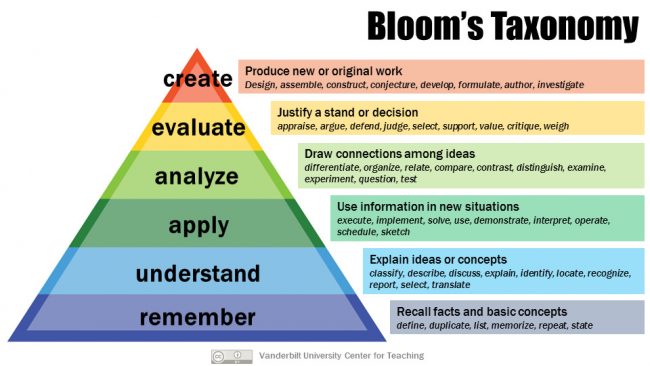
Then I will go onwards to discussing learning from the point of view of the famous Bloom’s Taxonomy (BT). The taxonomy can be mapped on SOLO, but it gives us a more detailed understanding of the ways people use different cognitive functions to learn, from beginner to advanced.

I believe it can be extremely useful to understand learning from the point of view of these concepts. By developing the ability to think about learning, it is possible to learn and teach more effectively.

Also, the ability to empathise with a person in the position of a teacher or a student can help in saving time and energy, as often learning and problem-solving can be hampered by false underlying assumptions about the person’s skills - be it learning or teaching.

Before going into the main topic, I want to draw attention to a quote by Carl Jung:

"The meeting of two personalities is like the contact of two chemical substances: if there is any reaction, both are transformed.”

Although the context of the quote is more psycho-therapeutic that educational, the parallels to learning and teaching are there. Whether we act as teachers or students, we can only get our point across by transforming ourselves. This is because every learning situation is unique, with its specific context and specific people.

To hear and be heard means that we encountered something genuine in the other person, and were able to negotiate successfully with them, so the problem at hand could be solved.

My most comfortable area of expertise is health and fitness, so I will use a simple example situation of a coach and a client doing a nutrition consultation. This way I can give you practical examples and ideas about how the SOLO and Bloom’s Taxonomy work in practice. I’ll also do my best not to simplify the more sophisticated and abstract points of the concepts.

Hopefully, a fuller and richer image of learning can emerge from these thoughts.


The hero Zelda receives a sword from the wise old man. The sword is a classic metaphor in Western culture for the ability to speak the truth. Learning and teaching happen often through the use of words, and if they are not truthful it will lead to a corrupt learning experience for both individuals.

Going SOLO


The SOLO has five levels. To illustrate the levels, let’s look at the nutrition consultation between the coach and the client. Let’s say the coach is called Sam and the client is called Stephen.

Stephen has been struggling with his eating habits for a long while. He eats unhealthy food most of the time. He eats irregularly. He is overweight, he has some mild body image issues and he doesn’t understand what healthy food is. He doesn’t know how to interpret his body’s signals, or how his social and psychological environment affects his behaviour.

Stephen is in the “pre-structural” level. He has an overly simplified view of food. He doesn’t know how to read nutritional labels, he doesn’t understand how calories or macronutrients work. Also, he is frustrated at his situation, so he often has emotional reactions to his friends' and colleagues' discussions about his eating habits, which has prevented him from addressing his issues.

Luckily, he has sought out a coach. With Sam, Stephen might be able to form an encouraging relationship, start learning about how to improve his eating habits and take action.

Sam is a proficient coach, and can effectively guide Stephen to a useful and fruitful understanding of his eating habits. From the point of view of the SOLO, Sam’s first goal is to get Stephen to the “uni-structural” level of understanding.

On the uni-structural level, Stephen starts to learn about different areas of nutrition. Sam will explain to him the basics of calories, how daily activity and macronutrients work. All the steps are combined with practical steps Stephen can integrate into his daily life.

For example, by tackling the two very powerful habits of eating slowly and eating 80% full on each meal, Stephen will start to see how the concepts he learns with Sam are put into practice.

Through the information given by Sam and the application, Stephen starts to see how his eating habits have many different sides to them. Seeing these sides brings him to the “multi-structural” level. Stephen’s simplified understanding is now turning into a complex whole. This can feel overwhelming, and this is where many people would quit, as it’s perfectly natural to be discouraged by the feeling that there is too much to learn.

So, at this point, Sam’s job is to keep Stephen focused on the things that matter. By dosing the complexity, Sam is able to guide Stephen through the practical and emotional hurdles that are part of a demanding learning process.

In time, the complex mess starts to morph into a unified whole. The interactions between the different moving parts start making sense. The early simple habits have build a strong, actionable foundation, and Sam can introduce more specific ideas about macronutrients, meal timing and solutions for special occasions, like parties, stress-based eating and more.

This is called the “relational level”. The overly simplified view first become a complex mess, but now it is turning into an elegant system, that Stephen can successfully implement in his everyday life. The problems he had with his eating habits have shrunk into manageable, often automatic tasks. His energy can be now directed into other endeavours and his life has improved a lot.

At this point, it might be that Stephen doesn’t need further learning, as he might feel that he has a handle on the topic that can serve him well for years and decades to come.

But, there is still one more level in the SOLO, for both Sam and Stephen to explore together. Since Sam is a proficient coach, he can operate well in the fifth, “extended abstract” level. Here Sam is able to deepen Stephen’s understanding about his eating habits.

Stephen learns how to conceptualise, generalise and apply his own, hard-earned expertise in novel situations. He can also communicate effectively with his friends, colleagues and even fitness professionals about his eating habits. He can’t be taken down by fads or other bullshit. He knows what matters, why it matters and where to put his energy.

By progressing through the SOLO stages, Sam and Stephen were able to build a powerful set of habits and ideas, that guide Stephen and make him self-sufficient for the rest of his life.

By forming a relationship based on trust and a shared vision, Sam’s and Stephen’s efforts transformed both of them. Sam learned about the specific issues Stephen was facing, and his expertise was further built up. Stephen transformed his life, as our eating habits are one of the most fundamental areas of life, that affect us, our families and our surroundings in deep ways.

So, if you want to learn effectively, you might want to go SOLO - but not alone!

But, how about Bloom’s Taxonomy?


Let your learning Bloom


Okay, sorry for the awful puns. But I can’t help myself, they just come. Anyways, let’s check out Bloom’s Taxonomy (BT).

Sam’s and Stephen’s shared journey had several stages, as they progressed towards a sophisticated and practical understanding of Stephen’s eating habits.

In the beginning Sam focused on building up Stephen’s “remembering" and "understanding” in regards to nutrition. These are the two first stages in BT. Stephen developed his basic awareness about the key issues, like calories, negotiating with family members about food, and his own psychological relationships to things like pizza, ice cream and alcohol.

After this initial phase of getting Stephen to open up, he was able to memorise, repeat and describe accurately his eating habits. He also learned to classify, discuss and explain himself to Sam, so they could together pinpoint the best next steps together.

A foundation for the third BT stage, “application”, was built. At this point, Stephen is able to solve some everyday problems he faces, by using the strategies developed with Sam. Stephen is also able to discuss his eating habits now more coherently with Sam, as his practical experiences develop his tacit knowledge.

As Stephen is learning more and more, he is able to “analyse” his situation better, which is the fourth stage in BT. Together with Sam they compare, contrast, criticise, examine and experiment different courses of action, finding those that work for Stephen and discarding others.

Through the countless little decisions and actions Stephen undertakes in his everyday life, he enters the fifth stage in BT, “evaluation”. Thus far Stephen has followed Sam’s advice pretty well, but now he is gaining more confidence. Sam and Stephen start engaging in more intense problem solving, including arguments, defending positions, judging, supporting and evaluating the things they encounter.

Just like in the “relational” level in the SOLO, the fifth stage in the BT is enough to make Stephen pretty self-sufficient in his eating habits. But, there is still a sixth stage in BT, which is “creating”.

On the creating-stage, Stephen is able to construct, create, design and communicate effectively about his eating habits. For example, he might jot down his own vision for his eating habits on paper. Then, him taking the lead Sam would be able to take the back seat and prod Stephen to make some relevant corrections while trusting that Stephen’s previously learned skills would guide him towards the right decisions most of the time.

This is a good visual representation of BT. I hope you may find success on all of these levels, without having the need to get to the highest stages in everything you do - I bet you'll have more to give in some areas than others, and I believe it's smart to capitalize in those areas.

Summary

The Structure of Observed Learning Outcomes and Bloom’s Taxonomy are powerful frameworks that can guide the understanding, planning, and execution of any interactions where learning is required.

By using an example of a nutrition coach Sam and his client Stephen, I showed how both of these frameworks are in play, as Sam and Stephen progress towards a better and healthier version of Stephen.

I hope this blogpost made you more aware of the different levels and stages that a person goes through as they are learning a subject. Also, I hope that if you found this useful, you will be able to use this awareness in your own learning, whether you are in the role of a teacher or a student.

Thanks for reading!

Disclaimer: This blogpost walked you through a simplified version of how the SOLO and BT work. In reality, and especially with fully developed adults the different levels interact constantly. For example, a cognitively developed adult might feel they are able to skip certain stages of learning if they have developed a considerable amount of expertise in another area in their lives. However, understanding that the SOLO and BT are pretty universal frameworks that show how learning works can serve as a good “humbling” device, so important steps in the learning process are not skipped.

keskiviikko 22. heinäkuuta 2020

So You Think You Can Read?

“Unless you transform through reading, you don’t know how to read.” This is a paraphrased idea that I’ve heard from several sources, and it has stuck with me for a long time.

Starting from kinder garden people are told that learning to read is one of the most important skills you can have. I do agree. Reading - and writing - are advanced forms of thinking, with which you can make sense of your world, organise yourself and solve very complex problems.

But, I have a long-standing pain. I haven’t really seen proper explanations about what it means to really know how to read. In this blogpost, I will look a bit deeper into the idea of literacy. I’ll mostly focus on reading, and those interested in writing should be able to draw valuable lessons for their craft too.


Reading Is Very Complicated


To understand what it means to be able to read, to read god-damn-hard, we’ll be using the Model of Hierarchical Complexity (MHC) to guide our thinking.

I’ve covered the MHC before here, but the gist of it is this: the MHC is a 16-stage framework that can be used to evaluate the complexity of things.

In the case of humans, the simplest actions are physical, chemical and physiological actions, that mostly happen without our conscious interference. But, as we mature, we gain the ability to use language, tell stories, construct systems, combine systems and even develop paradigms.

In fact, the 16th stage in MHC is the “meta-cross-paradigmatic” stage, which means that some people are able to think about the relationships between different paradigms. This is the most complex stage, an example of which might be the difficult topics of different cultures clashing, or big systems of thought like science and religion interacting.


The Early Stages Of Reading


The question “can I read” won’t get an easy answer. The truth is, that there are different levels of reading ability. By using the MHC, you can better understand how deeply you can read.

With this knowledge you’ll be able to take a proper position in the world of written communications, helping those who aren’t as skilled as you, enjoying and sharing your abilities with your peers and looking for guidance from those more advanced.

On the 5th stage of the MHC children learn to name objects. This turns out to be usually between the years 1-2.

The 6th stage is called “sentential”, and children learn to form sentences and simple stories. But it still takes some time for the actual skill of reading to properly develop.

Then, between the years 4-7 kids are able to learn to read. Recognising words, attributing real-life phenomena to the words and understanding the relationships between individual things and the abstract categories they form starts to solidify here. In the MHC these correspond to stages 7, 8 and 9, called the pre-operational, primary and concrete stages respectively.

Between the stages 5 and 9 kids can consume various kinds of written products. In the case of books, it all starts with picture-books, that slowly advance to books with single words, then sentences, building up to storylines spanning even several paragraphs.

On the 10th stage of the MHC, the abstract stage, children can already follow very complex stories. Examples from my adolescence are Lord of the Rings and Harry Potter, for example.

Think back to your childhood, around ages 8-12. At this point you likely started noticing that some people were drawn to reading books, while others were not. Here, the tastes and drives of people start to differentiate. These differences can last well into adulthood, as some people might read less than a book a year, mostly consuming short news-stories and audio-visual media, while others start getting engaged with more and more complex and demanding books.

In the 11th stage, the formal stage, reading abilities come more and more into play. The ability to collect evidence and construct arguments is developed here. This is often done by reading, as it is very difficult to hold several points of view in your mind at the same time. This stage starts around 12 years of age and continues on into adulthood.

If you are able to read well on the formal 11th stage, you may be able to participate in doing science on some level. Similarly, you can understand legal contracts on an okay level, and your ability to verbalise topics related to human relationships should be decent. In the case of books, it isn’t that surprising that many of the most popular types of books, such as romance novels found in airports and kiosks hit this stage pretty well.

Knowing how to read well based on the demands of the formal stage is a good accomplishment, and it is one of the backbones of modern societies, that rely heavily on written communications.


The Deeper Stages Of Reading


However, there are still five more stages to go, and here the idea of literacy starts becoming way more complicated and nuanced. There are a lot of people who never develop skills beyond this point, at least not consciously. Many professions that are regarded highly in society emerge, as we go higher in the stages.

On the 12th stage, the systematic stage, people learn to properly understand legal, societal, corporate, economic and national systems. The ability to understand issues from several points of view is developed here, as is the ability to construct multivariate systems, that are often required in complex problem solving.

Think of all the complicated legal, scientific and business transactions going on every day. It has required a long history of institutionalised education to develop societies, where people are able to carefully write and read the documents required for these kinds of co-operation. Not only are the people on this level able to read and follow instructions, but they can also make well-informed decisions that might be contrary to the system they are operating in.

Then, on the 13th stage, people know how to combine and compare systems, which are meta-systematic skills. Here a well-informed lawyer might be reading documents from several different field of law, a neurobiologist might be discussing research questions with a chemist, or a priest might be solving a conflict between to different religious sects.

This kind of understanding is unlikely to develop without a thorough background in reading. Reading about your own field, its subfields, its history, its recent developments, its sister- and competing fields and so on. On top of this, a wider background of general knowledge helps here, absorbed through novels, non-fiction books and more. It requires a considerable amount of brainpower to operate on this level, and generally societies reward people operating on this level relatively highly - with money, resources, safety and stability.

On the 14th stage we enter paradigmatic thinking. The amount of books written on this level is relatively small on this stage, and they can mostly be found in university libraries and dedicated professionals’ bookshelves. Understanding your field thoroughly and having the ability to assess the different systems within it is cognitively very demanding.

Deep-seated arguments about the “right way of doing” science, law, spiritual practices and more become very sophisticated here. Different schools of thought develop, with the innovative and knowledgeable pioneers becoming the founding fathers and mothers.

As these pioneers in their fields become established, they may expand into new territories, beyond their core-expertise. Or similarly, their disciples may sneak in influences from the outside, bringing us to the 15th, cross-paradigmatic stage of the MHC.

Great examples of cross-paradigmatic writing are Karl Popper's and Thomas Kuhn’s books about the philosophy of science. In their books the philosophers articulate and question the development of the whole scientific enterprise. Sharing these kinds of thoughts with a wider audience would be impossible without the ability to read widely and deeply, having the ability to contextualise different paradigms, extract out common patterns and find points of contention on a very abstract level.

Most people will be absolutely bored to death when approaching these topics, as they are very far removed from everyday life. However, an even smaller crowd operates on the 16th, meta-cross-paradigmatic stage. The greatest thinkers, spiritual leaders and generally super-smart and well-read people can operate here.

People like Friedrich Nietzsche, Bertrand Russell, Edward Said and Karl Friston are examples of those few people who have gotten their say in their own ways on this stage. These people are the giants, on whose shoulders everyone else stands, as they articulate and formulate the directions whole societies take.

Now, don’t get me wrong. I’m not saying that a person needs to be able to read and write on the highest level to have a large impact. Most of our actions are guided by unconscious processes. Just like a six-year-old kid can play marbles but doesn’t explicitly know the rules, many great people who have changed our societies are not men or women of the book, so to speak.

But in any case, the ability to read deeply is a powerful one.

In fact, reading is so powerful, that if you want absolute control over people's minds, burn their books. This way it's easier to keep "the peasants" from messing up your paradigms and systems...


Good Reading Makes You Act


So what about you? If you read this far, you can definitely read children’s books.

Are you able to understand the moral lessons behind children’s stories?

Are you able to take action on the valuable lessons about humanity contained in the classic novels of mankind?

Are you able to read a news story, understand its political, economical, legal, philosophical and even spiritual implications?

When you read an advertisement, can you see how it might draw from Christian morality, the concept of original sin, while simultaneously feeding the idea that your subjective experiences are more important than the objective truth, ultimately prompting you to feel like crap because your armpit doesn't smell like daffodils?

Can you see when Sam Harris and Jordan Peterson debate about the nature of truth, they are participating in a meta-cross-paradigmatic discussion about the foundations of our society - leaving themselves and the audience in a state of confusion, as talking about ideas on that level is so god damn difficult, that there are very few people capable of even attempting that?

How deeply can you read? How deeply do you think you need to know how to read? Is reading simply about recognising words and putting them in order?

Reading and writing have layers and layers of meaning. Single sentences may contain wisdom gathered through thousands of years. Whole libraries may be full of empty words.

So, if you thought you can read, I now hope that you know better, how well you can read.

With this, I hope you can go forward in your life, focusing your reading time on those texts that serve you the best, and then taking action on the valuable lessons you learn from your reading efforts.

Thanks for reading (shallow or deep, it's your choice)!


tiistai 14. heinäkuuta 2020

The Cheesecake Model Of Life - Understanding Your Problems Easily

Imagine a cheesecake, a really, really tall cheesecake. Then imagine, that the cheesecake has seven different flavor-full sections. But, the sections are actually put vertically in the cheesecake, and not in layers. So, if you would look from straight above, you’d see these seven different slices, like in a pie (or a pie-chart).

In this blogpost, I’m going to explain why it might be extremely useful for you to think about your life like a seven-flavoured cheesecake. This visual model can help you identify areas which are lacking in your life, and also understand the magnitude of the problems you are facing.

By looking at your life from this point of view, you’ll gain perspective, you’ll make better decisions, and you’ll be more understanding and compassionate towards yourself.

Yeees. Let me become a juicy and thicc cheesecake!

The Seven Flavours Of Life


Here are the seven key areas of life. I borrowed heavily from Dr. Jordan Peterson here, but I think he usually sticks with six areas when mapping out someone’s life.

1. Health: first and foremost this is your basic physical health. Daily habits such as eating appropriate amounts, sleeping enough and exercising go here.
2. Friends: these are the people you have chosen - more or less - voluntarily in your life. Hopefully, your relationships with them are reciprocal and productive somehow.
3. Love and family: this area is about your familial bonds and your romantic partner. Often times these relationships are characterised by more duties and responsibilities that friendships.
4. Education: everybody feels better, when they have been educated enough to the extent that matches their potential. It also gives them the tools to enhance other areas of life.
5. Work and career: some people want simple jobs, some people want fulfilling careers, some people just want passive income and get bored. In any case, you need to “make dem monies” somehow.
6. Hobbies: most people have free time. This time can be used in various ways, and several of them are fun, helpful, engaging and meaningful. These are your hobbies.
7. Drugs, alcohol and addiction: there is no shortage of powerful, addictive and mind-altering substances. They are intimidating, exciting, fun and dangerous. If you don’t have a plan for them, you might get ruined completely.

Alright, so those are the flavour of the cake. But why is the cake so tall?

The way I look at is, that it’s useful think about your whole life history, when looking at these areas. So, the tallness of the cake represents the time you’ve been alive. This helps us a lot, when we are trying to identify problems, and understand if they are big or small problems.


Little Problem, Big Problem


Let me give a couple of examples.

Suppose you are walking down the street to work, drinking a takeaway coffee. You bump into someone, the coffee falls and spills on your 70 € white Converse shoes. This is a problem because brown stains on white shoes don’t look professional. This is a mini-level social and financial problem, and you need to solve it somehow. In the cheesecake of your life - provided other things are kinda stable - this is something that screws up only a tiny layer in the cake, and you can quickly fix it by buying new shoes.

But, suppose you are a guy walking down the street with your girlfriend whom you’ve been dating for six years. Then, you bump into another guy. Your girlfriend's facial expression changes to panic, shame and anger, and the other guy stops in his tracks. This meeting starts a cascade of events, where you find out that during the past six years your girlfriend has had three other relationships with three other guys, two of whom you have regarded as good acquaintances.

This ain’t good for your cheesecake, I’m telling you. (Prepare for some simple math.)

Let’s say your life always in the present moment is 100% of the cheesecake. Then, one of the seven areas is 1/7th of that, which is about 14.3%. As the information about your misguided beliefs about your partner's fidelity flood your consciousness, your cake gets screwed up.

First of all, the six years you’ve been together are immediately transformed into a very bad tasting cheesecake. Suppose you are 30 years old. Six years is 20% of that. This means that 20% of the “Love and family” gets blown off and chocolate turns into dingleberries. This represents then about 3% of your total life getting completely fucked right on the spot.

But, what exactly led you in this situation? While later on it’s useful to narrow down and direct your attention to practical issues, we are not there yet. You need to ask yourself, how did I live my life in such a way that 3% got walloped in a single moment like that, without warning.

So now the whole pillar of “Love and family” comes under question. 1/7th of your life is in disarray. It requires massive efforts to organise this big of a chunk of your life - mentally, practically and socially.

But, it doesn’t end there. Remember how two of the “other guys” were your acquaintances? What kind of a person are you to know people like that? So, there goes another 1/7th of your understanding of your life.

Do you start to see how the cheesecake model can help you put a number on the severity of the problem?

By identifying the seven areas, and by thinking about them in terms of time and percentages, you can ballpark the magnitude of the issues you are working with.

Then, if you for example are recovering from a long addiction, money problems, a long-lasting familial trauma, or anything else major, you can run through this little thought game in your head.

Summary

It can take a lot of time to reorganize your worldview - which is the basis for every action and thought you take - after you’ve experienced a massive problem. It is a miserable experience, when your world gets blown apart by ignorance, chance or malevolence.

Your brain can simply work only so fast, in trying to make sense of what is going on. After all, its job is to keep on predicting what’s going to happen, and big problems mean that the brain’s idea of how the world is, was severely wrong.

It’s a huge task for your mental structures to reorganise themselves during and after a crisis. And after that there’s still the actual world to contend with, where you need to take action, instead of just thinking about what just happened.

All in all, I hope the cheesecake-model can help you understand better, that the problems you face can actually be very big. They spread in the system of your life quickly, infecting areas you wouldn’t even think about (...eating and sleeping like crap during a family or work crisis, anyone?)

At the same time, I believe that this way of thinking about your life can help you in remaining calmer and more reasonable in the face of serious issues. I’d say that’s a better outcome, than just eating a whole cheesecake in a single sitting because life is tough, don’t you think?

Thanks for reading!


maanantai 13. heinäkuuta 2020

Everyone Owns A Pyramid - How Is Yours Doing?

In the previous three blog posts we’ve looked into how we can map the world successfully, going from the simplest thing to the most complex using the Model of Hierarchical Complexity.

We’ve also looked into the most basic fundamentals of how we as conscious living interact using predictions. To understand this we introduced ideas like Bayesian inference, the Markov Blanket and the Free Energy Principle.

I also promised that next up would be more practical things. But then I realised, the groundwork hasn’t been laid out well enough yet, so a couple of more philosophical posts will follow.

This time I’ll be going through an extremely powerful framework to understand the development of animal and human cultures. I discovered this framework in Jordan Peterson’s book “Maps of Meaning”, but I’ve added my own twist to it. 

As far as I know, the framework doesn’t have a name, so I’m gonna dub it simply “Peterson’s pyramid”. Oh, by the way, Peterson doesn’t use a pyramid, just a simple flowchart. …but I’ll tell you soon why a pyramid is such a powerful way of looking at this thing, just read on!

Also, here are the links to the previous posts, if you need 'em!

1. A Smelly Fart, The Death Of God And The Model Of Hierarchical Complexity
https://isonaminustatuleeviisas.blogspot.com/2020/07/a-smelly-fart-death-of-god-and-model-of.html

2. How To Trade And Fight Fruitfully - Using The Model Of Hierarchical Complexity In Conflict Resolution https://isonaminustatuleeviisas.blogspot.com/2020/07/how-to-trade-and-fight-fruitfully-using.html

3. Everything Is Alive - Even Ideas And Mental Disorders https://isonaminustatuleeviisas.blogspot.com/2020/07/everything-is-alive-even-ideas-and.html


The Secret Pyramid That We Live In


So, first imagine a pyramid. This pyramid is going to represent the psychological development of a culture. It has ten stages, and they go like this:

  1. At the bottom of the pyramid there is “Creative exploration”. This is the most fundamental way creatures interact with their environment. Every action done by single-cell organisms up to human beings is always creative exploration. It can also be other things, but there is never an action or a thought that wouldn’t partly contain the question “what happens if I do this”.

  1. The next level of the pyramid is “Generation of adaptive behaviour”. For example, at one point in time, most living creatures had an ancestor that didn’t really understand that they die if the go into a volcano. But, after several tries, we - the life on the planet - figured out collectively that “stay away from too hot” is a good rule to live by. So, creative exploration morphs into adaptive behaviour.

  1. This adaptive behaviour is so valuable, that we also figured out how to transmit it without everyone having to go through the same painful learning experiences. So, on this third level of the pyramid we’re talking about is “Imitation of adaptive behaviour”. If you’ve ever wondered why the saying “lead by example” is so powerful it is because of this: imitation is the most basic form of transmitting behaviours in a culture. Everything else pales in comparison.

  1. On the fourth level is, rather surprisingly, “Play”. Why play? In this case Peterson is talking especially about rough and tumble play, which is coordinated physical action between willing participants. The famous neuroscientist Jaak Panksepp identified a whole brain circuit governing play. Peterson likens this to discovering a continent, and the more I think about it, the more I agree.

    The power of play is heavily underestimated. It is at the same time a very primitive but also sophisticated form of building social cohesion, understanding boundaries and it serves as the foundation of our moral concepts. (If you or your friends don’t know how to play nice, you might want just want to build a WALL between you and others, for example…)

  2. Play serves as the basis for the more complex acting out of subconscious ideas - this is the fifth level of “Ritual”. Humans, other primates, and many other mammals have rituals. For example wolves may act out symbolic fights and even symbolic executions to establish their social hierarchies. Humans used to act out sacrificial rituals in very corporeal fashion, but nowadays stock investments and rock gigs are great examples of rituals - the former are about bargaining with the future, the latter about acting out a shared experience.

  3. But, rituals are still not that conscious. On the sixth level of the pyramid signs of a more sophisticated conscious action starts emerging as “Drama”. The non-verbal rituals start turning into planned, physically acted out narratives that people repeat and change.

  4. From drama, we get to the seventh level of “Narrative”. Here the ancient oral traditions start building up in their local forms. Complex information is stored in stories, so we don’t need to constantly keep on learning through experience. Cognitive capabilities start developing more and more, as the narratives become more complex.

  5. Then, on the eighth level we reach “Mythology”. Mythologies are higher-level narratives that combine the key messages of simpler narratives into memorable and applicable stories. However, these stories are still relatively close to the physically active forms of cultural transmission of ritual, play and imitation. They are not modern, rational and logical explanations of a narrow sub-set of phenomena. Instead, they are the first attempts at abstract thinking.

  6. On the ninth level have “Religion”. Religion differs from mythologies, as professed creeds, legal structures and other complex systems appear. Shamans turn into priests and the language used becomes less imagistic, although it still relies heavily in mystic and artistic expression.

  7. On the tenth level, where the pyramid is the narrowest, we have “Philosophy”. This is closest to a modern understanding of what knowledge is. Logically articulated arguments, rational thinking and higher-level cognitive functions get their say here. Typically when people get frustrated arguing on Facebook, somebody is braking the basic rules that govern this stage, and then there’s a high chance that the whole discussion devolves into the lower levels.

Alright, so that’s Peterson’s model. I personally would add “Literature” between the 9th and 10th stage. This is because literature is something I consider shorter-lived than religious structures, but less rational and logical than philosophy. Perhaps some other forms of art would fit here too.

Then, on top of the pyramid, I might put science. This is because philosophy is a very high-level subject, and science seems to formulate the most detailed and narrow knowledge of the world we have.

Why A Pyramid, Explain!


Now, if you are a person who really values science, the word “narrow” in the above sentence might annoy you - and even if it didn’t, this is a very carefully chosen word that reveals the “Why” of choosing a pyramid to represent this whole structure.

Think about a pyramid as a shape. Its base is wide, and it gets narrower and narrower as you go up. Each level occupies less and less space.

So here’s the kicker: The space that is covered by a single level of this “Peterson’s pyramid” represents the number of actions taken on that level.

So, let’s follow the original pyramid that has 10 levels. How do you get to a single philosophical idea?

Let’s say for the sake of argument that you might need 10 religious ideas and extract the core message from them. Yeah, I pulled the number 10 out of my hindquarters, but you’ll get the point soon.

For each religious idea, you go through 10 mythological ideas.

And down and down you go, until you reach the stage of creative exploration, each time multiplying the number of actions you take. So if there are 10 stages, you’ll add a total of 9 zeroes to reach the number of “creative exploration acts” that need to be collectively done to get that one philosophical idea.

Look, the math isn’t the point here. I just want to communicate the idea that a ridiculous amount of things need to happen for a culture to start developing - and learning from - philosophical or scientific ideas.

It’s Always About Nietzsche, Somehow


To illustrate the above point further, let’s look at a quote by Friedrich Nietzsche:

"It has gradually become clear to me what every great philosophy up till now has consisted of – namely, the confession of its originator, and a species of involuntary and unconscious autobiography; and moreover that the moral (or immoral) purpose in every philosophy has constituted the true vital germ out of which the entire plant has always grown.”

What does this quote mean? Well, think about all the things that need to happen for someone like Plato to develop his philosophy of “forms” or write a book like “The Republic”. First, there is the massive phylogenetic line of living organisms that Plato is part of, and the genetic information stored within him that shapes who he is. Then there is the culture around him, his natural environment, his friends and enemies, his bed, his food, his walks and wrestling matches. -- And you too, you have your own philosophy of life, even if you haven't articulated it.

The point is that being alive happens mostly on the lower levels of the pyramid. This being alive is the thing that shapes the higher levels.

This is crucial, because nowadays many people seem to have forgotten this, or are not admitting this. Philosophy is cast away for narrow-minded scientism. Religion is cast away for “rational and logical” philosophizing. The rich and absolutely necessary forms of drama, ritual and play are shut off, as rough and tumble play is banned in schools, people participate less and less in real hobbies and a mindful ritualistic life is supplanted by mindless consumerism.

Wrapping It Up


My belief is that if you want to live successfully, you need to “build your pyramid” in a harmonious way. You need to go out there and just do things and pay attention to how the world reacts and adapts accordingly. You need to let imitation be your guide in shaping the social structures around you. You need to play - wrestle, joke, tickle, hug, you name it. 

You need to pay attention to the daily rituals you perform (and most of them are sub-conscious!). You need to express your emotions with the tools of drama and verbal expression to understand and be understood by others. 

You need to know the guiding mythological and religious stories of your culture, like “God”, “Saviour”, “Adversary”, “truth”, “love”, “hatred”, “Mother”, “Father”, “Evil”, “Good” and so forth.

And if you are lucky, you may also develop a deeper philosophical understanding of all this, and even divert your energies to the highly sophisticated - but narrow - acts of scientific discovery.

Unless a lower level is in order, whatever is build on top of won’t be as strong and lasting as it could be. And while this is not the place to talk about, it was Nietzsche who diagnosed with his “Death of God”, that our culture is in a deep, deep crisis, where our lower-level actions are severely cut off form our intellectual and scientific ways of being, as we’ve decided to abandon our religious and mythological traditions, instead of nourishing and pruning them like a responsible person.

A pyramid is a representation of a hierarchy. A crappy hierarchy falls apart, like the tower of Babel. But, without a hierarchy, you won't even know what is up or down, and you can't act. BTW, the previous sentence should be taken literally, not metaphorically.


Two final, fascinating points are these. 

First, If you compare this “Peterson’s pyramid” to the Model of Hierarchical Complexity I covered in the previous posts, you can’t but help see many parallels. Both of these models represent the idea of a complex and sophisticated structure emerging from more basic elements.

Second, when you start treating phenomena in the pyramid as living beings, as defined in the post before this one, you can gain a deep appreciation for how complex the world is. I believe the sense of awe and respect this can give you can serve you to make better decisions in your life, as you’ll be less arrogant and more honest with yourself.

Alright, so we’re getting closer and closer to a point where this stuff can finally be made practical. But, I’m not gonna rush the process of laying the foundation, because as expressed above, a shaky foundation prepares you for a mighty fall.

As always, thanks for reading!

P.S. I’m still paying attention to how long these things take to write. I wrote this in about 1 hour 20 minutes, but I had thought about these topics for many hours over several months.

P.P.S. And just as a note, I don't edit, these texts are basically a simple flow of pre-meditated thoughts. (Okay I use Grammarly to fix errors, but that's it.)